

 Tiếng Việt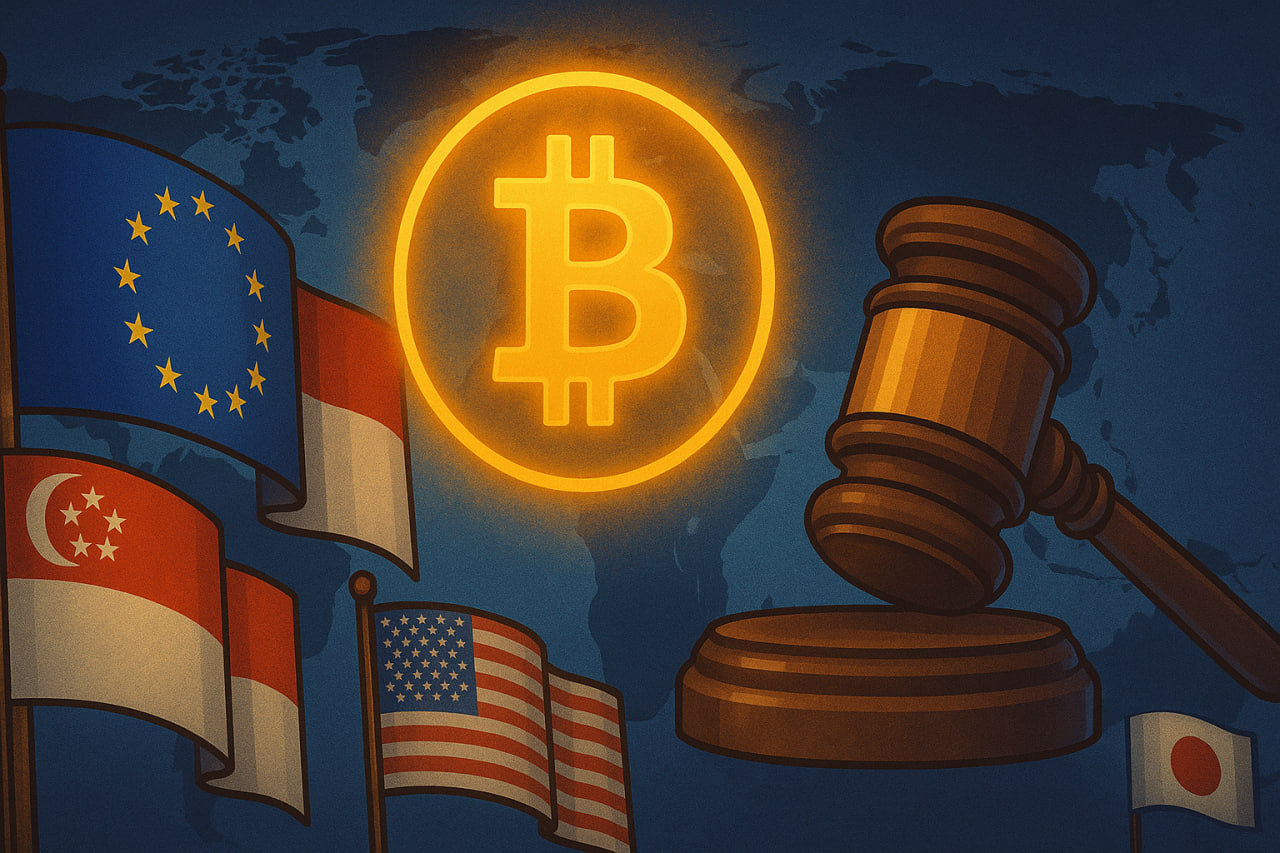
1. Why regulate crypto assets and markets?
The regulation of digital assets and crypto markets is driven by several key motivations:
-
Investor protection & market integrity: Unregulated markets have seen fraud, manipulation, and the collapse of platforms.
-
Financial stability & systemic risk: Unchecked crypto activity can spill over into the wider financial system, potentially causing instability.
-
Innovation enablement: Proper frameworks foster legitimate business models and institutional participation in crypto markets.
-
Regulatory clarity & consumer trust: Clear rules make it easier for consumers and businesses to engage in the crypto space confidently.
By addressing these issues, regulations help ensure that the crypto market remains secure, transparent, and sustainable.
2. Global overview of regulatory landscapes
.webp)
The landscape of crypto regulation worldwide is complex and diverse, with countries adopting different approaches to address the rapidly growing digital asset market.
2.1 Fragmented status
Crypto regulation worldwide remains highly fragmented, with different jurisdictions adopting varied approaches. Some countries, like the EU and the U.S., have taken significant strides in shaping their regulatory environments, while others have yet to implement clear frameworks.
The disparity between these regulatory approaches leads to a fragmented market where businesses must navigate different sets of rules based on their geographical reach and operational needs.
2.2 Snapshot of key jurisdictions
-
European Union (EU): The EU's Markets in Crypto‑Assets Regulation (MiCA) represents a comprehensive effort to regulate the sector, focusing on transparency, authorisation, and consumer protection.
-
United States: The U.S. regulatory framework is more fragmented, with multiple agencies overseeing crypto activities. However, there have been recent efforts to unify and streamline regulations.
-
Other jurisdictions: Several countries are progressing towards implementing regulations, with many focusing on anti‑money laundering (AML) and consumer protection.
These varying frameworks show that while there is global momentum towards regulation, the implementation is far from uniform.
2.3 Key themes in regulation
Across jurisdictions, certain regulatory themes repeatedly emerge:
-
Classification of crypto assets: One of the main challenges in crypto regulation is determining whether digital assets are commodities, securities, or something else entirely.
-
Stablecoin oversight: Stablecoins, due to their potential to disrupt the global financial system, are receiving heightened regulatory attention.
-
Licensing and registration of service providers: Many jurisdictions now require exchanges, custodians, and other service providers to register or obtain licenses.
-
AML/CTF rules: Many countries are implementing stricter anti‑money laundering and counter‑terrorism financing regulations for crypto transactions.
-
Market‑integrity and consumer‑protection requirements: Regulations increasingly focus on ensuring transparency, fairness, and adequate risk disclosures in crypto markets.
These themes highlight the growing focus on creating a secure and stable crypto environment while safeguarding consumers and the financial system.
3. Detailed analysis: Crypto Market Regulation by Region

As crypto markets expand globally, understanding regional regulations is key to compliance and long-term business success. Here’s an in-depth look at the regulatory approaches in major regions:
3.1 European Union (EU)
The EU’s MiCA regulation is one of the most significant developments in crypto market regulation worldwide. This regulation sets clear rules for the issuance and trading of crypto‑assets that are not already covered by existing financial laws. It also introduces specific requirements for stablecoins and asset‑backed tokens.
For businesses and service providers operating in or targeting the EU market, understanding and adhering to MiCA is essential for compliance. It offers a clearer regulatory path and ensures transparency, contributing to the long-term stability of the crypto market.
3.2 United States
In the U.S., the regulatory landscape is still evolving. Different agencies, such as the Securities and Exchange Commission (SEC) and the Commodity Futures Trading Commission (CFTC), oversee various aspects of crypto regulation. However, there is growing momentum to create more consistent, federal-level regulation for digital assets.
For crypto businesses operating in the U.S., keeping up with both federal and state-level regulations is crucial. With the push for clearer rules, the U.S. crypto market may soon benefit from a more unified and predictable regulatory environment.
3.3 Emerging and other jurisdictions
While some regions are ahead in their regulatory efforts, many emerging markets are still in the early stages of implementing crypto regulations. However, there is a clear trend toward greater regulation, particularly in areas like the "Travel Rule" for crypto transactions and efforts to curb illegal activities such as money laundering.
For global crypto projects, understanding these varying regulatory approaches is crucial when expanding to new markets. As more countries move towards comprehensive regulation, the overall landscape will become clearer, benefiting businesses and consumers alike.
4. Implications for market participants & strategies

With crypto regulation evolving at both regional and global levels, market participants must stay ahead of the curve. Here are the implications and strategies for various stakeholders:
4.1 For crypto issuers / token projects
Issuers need to ensure their tokens are correctly classified and comply with local regulatory frameworks. This includes obtaining the necessary licenses and adhering to disclosure and consumer protection rules.
Designing transparent tokenomics and preparing for the potential regulatory scrutiny of token sales and transfers is also crucial to avoid legal risks and maintain investor confidence.
4.2 For exchanges & service providers
Crypto exchanges and service providers must be aware of the licensing requirements in different jurisdictions. Additionally, they must implement strong anti-money laundering (AML) and know-your-customer (KYC) measures to ensure compliance with global standards.
These companies should also anticipate potential regulatory audits and ensure their internal processes are aligned with global regulations.
4.3 For investors & funds
Investors and funds need to stay informed about the evolving regulatory environment to avoid potential legal risks. Understanding the regulatory landscape can also present investment opportunities in well-regulated markets that offer greater legal protections and investor safeguards.
4.4 For marketers & SEO content
Content creators and marketers in the crypto space should emphasise jurisdiction-specific insights in their content. Understanding the regulatory nuances in each market and integrating these insights into well-structured, keyword‑rich content can help improve SEO performance and drive authority in search results.
Including up‑to‑date references and credible data will not only enhance content relevance but also improve rankings on search engines.
5. Key challenges and future outlook

As the global landscape of crypto market regulation continues to evolve, there are significant challenges and a promising future to consider for market participants.
5.1 Challenges
The main challenges to crypto market regulation worldwide include:
-
Regulatory fragmentation: While progress is being made, the lack of a global standard still complicates cross‑border operations.
-
Classification ambiguity: The classification of crypto assets remains unclear in many jurisdictions, which creates potential enforcement risks for businesses.
-
Cross-border enforcement: The decentralized nature of crypto transactions makes cross‑border enforcement difficult, posing challenges for regulators.
-
Innovation vs regulation balance: Striking the right balance between regulation and innovation is critical for the growth of the crypto market.
5.2 Future outlook
Looking ahead, we expect to see greater harmonisation of crypto regulations across jurisdictions. With MiCA leading the way in Europe and other regions following suit, crypto market regulation will likely become more consistent and predictable.
Stablecoins will remain a major regulatory focus, and businesses must prepare for tighter oversight in this area. Ultimately, firms that embrace regulatory compliance will have a competitive advantage in the evolving global market.
6. Conclusion
Crypto regulation worldwide is a fast-evolving landscape that directly impacts the growth and stability of the digital asset market. As regulatory frameworks develop and become more consistent, businesses that stay ahead of the curve will be better positioned for success. The future of crypto market regulation will undoubtedly shape the industry for years to come, making it crucial for all market participants to stay informed and compliant with the latest developments.
Read more: