

 Tiếng Việt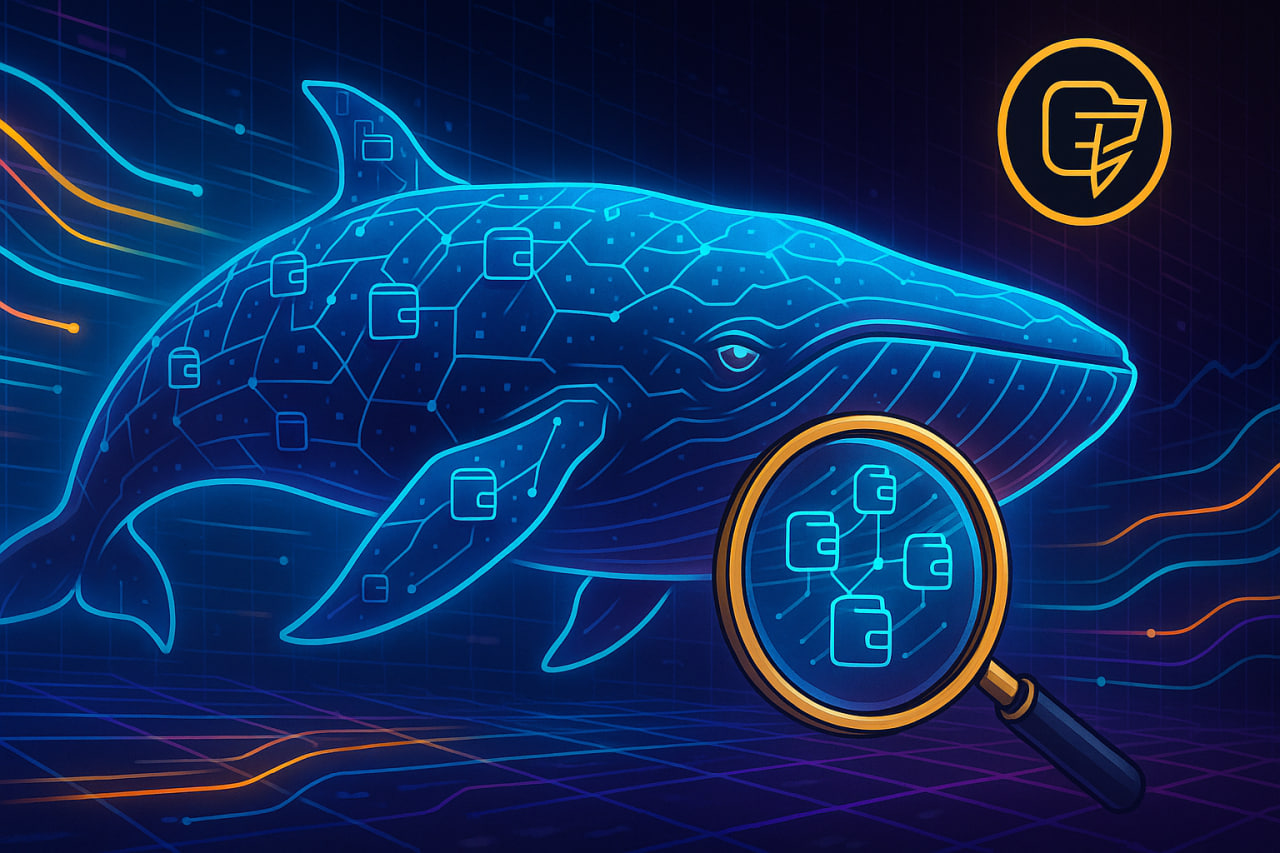
1. What Exactly Are Crypto Whales?
A crypto whale refers to a wallet or entity holding a very large amount of cryptocurrency, enough to move markets with a single transaction. These whales can be individuals, early adopters, institutions, or funds managing massive portfolios.
Their impact is profound because:
-
They influence liquidity: Large buy or sell orders can shift prices, especially in smaller-cap markets.
-
They reflect sentiment: Whale accumulation or dumping often foreshadows broader market trends.
-
They set the narrative: When whales rotate into sectors like AI, RWA, or DeFi, retail usually follows weeks later.
In essence, whales are the “market makers” behind the scenes, their movements provide clues about where the next wave of capital is flowing.
2. Why You Should Track Crypto Whales
.png)
Tracking whales isn’t about blind copying, it’s about reading capital flow intelligence.
When you track whale wallets, you gain insight into hidden momentum and smart money behavior.
Here’s what this data can tell you:
-
Accumulation patterns: Continuous inflows to whale wallets show growing conviction in a token.
-
Distribution signals: Large deposits to exchanges often indicate an upcoming sell-off.
-
Sector rotation: Whales shifting funds from stablecoins into specific categories (e.g., AI coins) suggest narrative transitions.
-
Exit timing: Watching whale exchange activity can help you time exits before retail panic begins.
Whale tracking converts raw blockchain data into early signals, like seeing the waves before the storm hits.
3. Main Types of Whale Tracking Tools

Different tools serve different strategic purposes. Below is a structured overview of the most useful categories for anyone looking to track crypto whales effectively.
3.1. Whale Alert Platforms
Ideal for beginners, these services show large token transfers across chains in real time.
They provide:
-
Instant alerts for million-dollar transactions.
-
Broad coverage (BTC, ETH, stablecoins, altcoins).
-
Simple dashboards with limited analytics.
3.2. On-Chain Analytics Platforms
These go deeper, labeling wallets and analyzing long-term patterns.
Examples: Nansen, CryptoQuant, Glassnode.
They offer:
-
Whale balance charts and exchange inflow/outflow metrics.
-
“Smart Money” labels to identify top-performing addresses.
-
Insights into narrative rotations and fund movements.
3.3. DEX & Chain-Specific Trackers
Perfect for traders tracking early trends in DeFi and altcoins.
These include tools like DexCheck or DeBank, which display:
-
Whale swaps and liquidity movements across decentralized exchanges.
-
Holdings and token interactions across EVM chains.
-
Wallet follow features for live tracking.
3.4. Exchange & Derivatives Trackers
Focused on major CEX data, especially Binance whale tracker dashboards.
They monitor:
-
Exchange inflows/outflows by size.
-
Whale futures positions, open interest, and liquidation heatmaps.
-
Funding rate trends that show sentiment among leveraged players.
4. Tracking Binance Whales

Because Binance dominates liquidity, many traders focus on Binance whale tracking specifically. While Binance doesn’t publish whale data directly, you can recreate a tracker using combined on-chain and derivatives analysis.
Here’s how:
-
Monitor on-chain inflows/outflows to Binance wallets through Nansen or CryptoQuant.
-
Increasing inflows often precede sell pressure.
-
Increasing outflows suggest whales moving coins to cold storage - a bullish signal.
-
-
Observe futures and derivatives activity on CoinGlass or similar dashboards.
-
If whales are adding long positions while moving funds off exchanges, that signals confidence.
-
If they’re depositing coins while open interest spikes, prepare for a potential correction.
-
This dual-view approach: spot + derivatives gives the clearest picture of what Binance whales are preparing to do next.
5. Choosing the Best Crypto Whale Tracker
The “best” tracker depends on your depth of analysis and trading style:
-
For serious on-chain investors: Nansen, Arkham, or CryptoQuant - ideal for detailed behavioral data and institutional-level dashboards.
-
For macro analysts: Glassnode and Santiment - excellent for long-term whale ratios and market cycle studies.
-
For DeFi and altcoin traders: DeBank, DexCheck, and BubbleMaps - perfect for tracking liquidity rotations and early token accumulation.
-
For beginners or casual users: Whale Alert and CryptocurrencyAlerting - simple, free, and sufficient for big-move monitoring.
The best whale tracker isn’t the one with the most data, it’s the one you use consistently and understand intuitively.
6. Common Mistakes in Whale Tracking
Even with great tools, many traders misuse whale data.
Here are pitfalls to avoid:
-
Copying whale trades blindly. You see movements, not strategies. Whales hedge and rebalance constantly.
-
Misreading exchange flows. A large deposit doesn’t always mean selling, sometimes it’s collateral for futures.
-
Ignoring liquidity context. A $1M move in BTC ≠ a $1M move in a low-cap altcoin.
-
Over-focusing on one wallet. True analysis requires pattern recognition across clusters, not single addresses.
7. Final Thoughts
To track crypto whales effectively is to speak the language of capital. Each whale transaction is a message - a signal of conviction, fear, or positioning.
When combined with technical and narrative analysis, crypto whale tracking transforms into a strategic advantage. It helps you identify when markets are quietly heating up or cooling down, often before the crowd reacts.
As the crypto ecosystem matures in 2025, the winners won’t just be those who trade fast, but those who read the blockchain.
Learn to track whale wallets, interpret the motives, and position yourself accordingly, because where the whales swim, the tide always follows.
Read more: