


 Tiếng Việt
1. What is an Interest Rate?
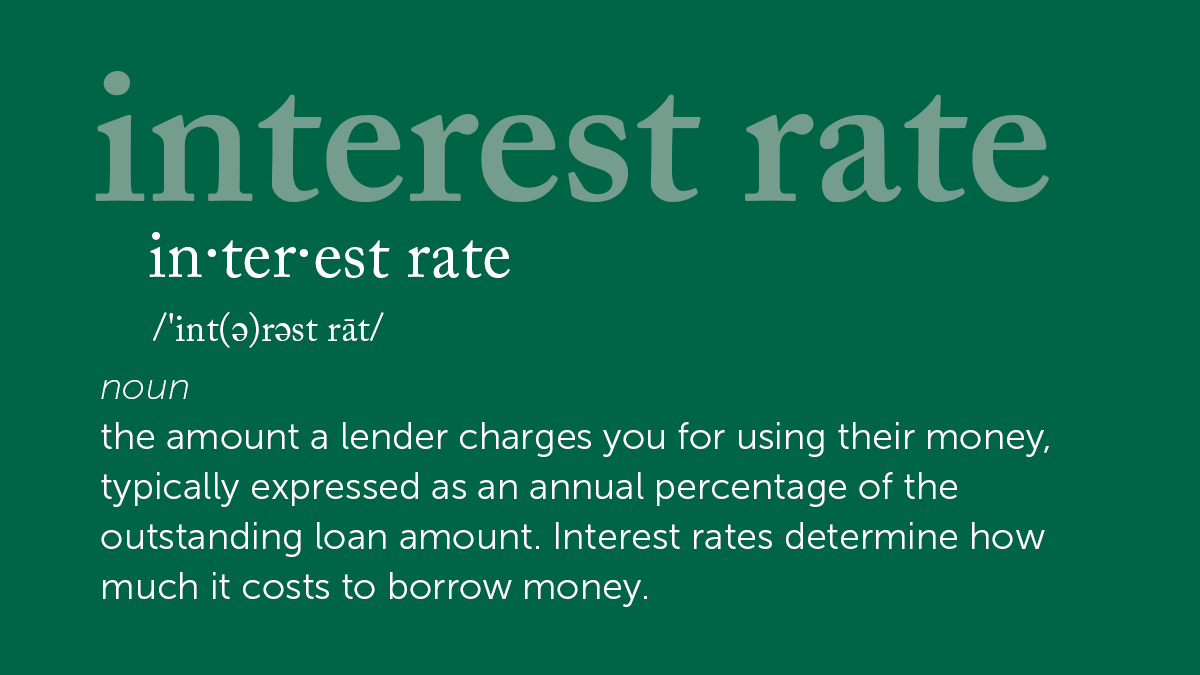
An interest rate is the percentage charged by a lender on the amount of money that is borrowed, or the percentage paid by a borrower for the use of money. This rate is typically quoted on an annual basis and can either be fixed (remaining the same throughout the term of the loan) or variable (fluctuating based on market conditions).
The interest rate can apply in two primary forms:
-
Simple Interest: Interest is calculated only on the principal amount (the original sum of money borrowed or invested).
-
Compound Interest: Interest is calculated on both the principal and any accumulated interest from previous periods.
In most lending scenarios, the interest rate is calculated as part of the payment schedule (monthly, quarterly, or annually), and the payments reflect the interest on the amount borrowed.
2. What is APR (Annual Percentage Rate)?
.png)
The Annual Percentage Rate (APR) is a broader measure of the cost of borrowing money, which includes not only the interest rate but also any additional fees or costs associated with the loan. APR represents the total yearly cost of borrowing as a percentage of the loan amount. It allows borrowers to see the true cost of a loan over the course of one year, making it easier to compare different loan offers.
APR Formula
APR is calculated using the following formula:

Where:
-
Total Interest is the total interest paid over the life of the loan.
-
Fees are additional costs or charges associated with the loan.
-
Loan Amount is the original principal amount.
-
Loan Term is the duration of the loan, usually expressed in days or years.
APR includes all the costs involved in obtaining a loan, including application fees, processing fees, underwriting fees, and any other charges imposed by the lender.
3. Key differences between APR and Interest Rate
Though both APR and the interest rate affect the overall cost of borrowing, they have significant differences. Let’s compare the two in detail:
| Feature | Interest Rate | APR |
| Definition | The percentage of the principal charged as interest | The total cost of borrowing, including interest and additional fees |
| Includes Fees | No | Yes, includes fees and other charges |
| Used For | Primarily used to determine monthly payments on loans | Helps to compare the total cost of different loans or credit offers |
| Focus | Focuses solely on the cost of borrowing the principal | Focuses on the overall cost of the loan or credit, including extra fees |
| Time Period | Typically quoted as an annual rate | Always quoted on an annual basis (yearly) |
| Compounding | May or may not include compound interest | Includes the effect of compounded interest and fees |
4. Why APR is more comprehensive than Interest Rate
.avif)
The APR is a more complete and accurate measure of how much you will actually pay for a loan, especially when you factor in any hidden costs or additional fees that might not be evident from the interest rate alone. It provides a more transparent view of the true cost of borrowing.
4.1. Fees and Additional Costs
Interest rates may only include the cost of borrowing the principal, but they do not account for extra fees like:
-
Origination Fees: Fees charged for processing a loan application.
-
Application Fees: Fees for initiating the loan.
-
Closing Costs: Fees for finalizing the loan agreement.
-
Prepayment Penalties: Charges for paying off a loan early.
APR includes these costs, which is why it often appears higher than the interest rate. When comparing different financial products, APR gives a better indication of the overall cost.
4.2. Loan Comparison
The inclusion of all costs in APR allows consumers to compare different financial products on a more equal footing. For example, one loan might have a low-interest rate but high fees, while another might have a higher interest rate but low fees. APR accounts for both of these factors, helping you to better evaluate which loan offers the best deal.
5. When do you use APR and interest rate?

Both APR and interest rates are useful in different contexts. Here are some scenarios where one might be more relevant than the other:
5.1. When to Focus on Interest Rate
-
Short-Term Loans: If you are taking out a loan for a short period, such as a few months, the interest rate might be the most important factor. In these cases, fees are less likely to make a significant impact on the overall cost of borrowing.
-
Simple Loans: If the loan is straightforward with minimal fees (e.g., personal loans or credit cards), the interest rate alone might be sufficient to understand the cost.
5.2. When to Focus on APR
-
Long-Term Loans: For mortgages, auto loans, or large personal loans, APR is a more useful metric as it captures all the hidden fees and costs associated with the loan.
-
Comparing Different Lenders: If you are comparing loans from different financial institutions, APR allows you to see a more accurate picture of what each lender is charging, especially when the loans have varying fee structures.
6. How does APR affect your loan payments?

The APR directly influences your monthly payments. A higher APR means higher monthly payments, as it includes not only the interest but also the additional fees that the lender might charge. The APR is particularly important when calculating:
-
Total Cost of the Loan: Over the entire term of the loan, a higher APR means you will pay more in total.
-
Monthly Payment: Loans with higher APRs tend to have higher monthly payments, as the cost is spread across the loan term.
By understanding APR, you can better assess whether a loan is affordable based on your budget and financial goals.
7. Real-World examples of APR and Interest Rate

To illustrate how APR and interest rates affect your borrowing decisions, let's look at two examples of borrowing.
7.1. Example 1: Mortgage Loan
-
Loan Amount: $300,000
-
Interest Rate: 3.5% (fixed for 30 years)
-
APR: 3.7%
Even though the interest rate is 3.5%, the APR is higher due to added fees like loan origination fees, closing costs, and other administrative charges. The APR gives a clearer picture of how much you'll pay over the life of the mortgage.
7.2. Example 2: Credit Card
-
Credit Card Interest Rate: 18% (variable)
-
APR: 22%
The APR on a credit card includes the interest rate, as well as other charges like annual fees and transaction fees. In this case, the APR is higher than the interest rate because of the added costs associated with using the credit card.
8. Conclusion
In conclusion, while both APR and interest rate are essential components of borrowing, understanding the distinction between the two is crucial for making informed financial decisions. The interest rate tells you the cost of borrowing the principal amount, whereas the APR provides a broader perspective, including fees and other costs, giving you a more accurate sense of the total expense involved.
When evaluating loans, mortgages, or credit cards, always consider the APR in addition to the interest rate, especially if there are significant fees or hidden charges. By comparing both APRs and interest rates across different lenders and loan types, you can ensure that you are making the best possible financial choice for your needs.
Read more:
.png)