

 Tiếng Việt
1. What is Ardor?
Ardor is a blockchain platform that aims to provide a scalable and customizable solution for businesses and developers. It facilitates businesses and organizations to independently establish their own chains in the form of child chains on the Ardor Blockchain.
Founded in 2016, Ardor was established by Jelurida and has been developed by the project team associated with the NXT Blockchain.
2. Key features of Ardor
Parent-Child Chain Structure:
-
Parent Chain (Ardor): Ardor serves as the main or parent chain, securing the entire network. It handles and stores the main transactional and security functions.
-
Child Chains: These are individual chains connected to the Ardor parent chain. Each child chain operates independently, allowing businesses, projects, or applications to have their dedicated blockchain while benefiting from the security of the Ardor network.
Scalability through Pruning:
Ardor employs a pruning mechanism to enhance scalability. Pruning involves the removal of unnecessary data from the blockchain, reducing its size and improving overall efficiency. In Ardor, only essential transactional data is retained on the parent chain, while historical data is moved to the child chains.
Proof-of-Stake (PoS) Consensus Mechanism:
Ardor uses a PoS consensus mechanism for block validation. Participants (forgers) are chosen to create new blocks and validate transactions based on the number of tokens they hold and are willing to "stake" as collateral. This approach aims to be energy-efficient and provides an eco-friendly alternative to traditional proof-of-work (PoW) systems.
Blockchain as a Service (BaaS):
Ardor operates as a BaaS platform, meaning it offers a ready-to-use blockchain infrastructure for businesses and developers. This approach allows users to create their own custom child chains, which are interconnected with the main Ardor blockchain.
Built-in Features:
Ardor includes built-in features like a decentralized asset exchange and a monetary system. Users can create and trade assets directly on the platform, and the monetary system allows for the creation of custom currencies.
In essence, Ardor's architecture enhances scalability by separating transactional and historical data, and its PoS consensus mechanism and BaaS model contribute to a more efficient and flexible blockchain ecosystem. Keep in mind that the details provided offer a simplified explanation, and the platform's full functionality involves more intricate technical elements.
3. Ardor use cases
Supply Chain Management
Ardor's multi-chain architecture is a powerful tool for creating customized supply chain solutions. Businesses can use individual child chains to monitor the movement of goods, ensuring transparency and authenticity in the supply chain. With features like asset exchange and secure messaging, Ardor provides essential tools for efficient supply chain management.
Notable examples include VesselChain, a pilot project using Ardor's blockchain for asset registration in Maritime Supply Chain Compliance Data. Another project, Senator, in collaboration with Accenture and Corres and funded by the European Union, explores the use of Ardor for decentralized digital identity and supply chain traceability in freight logistics. This showcases Ardor's adaptability for various innovative applications.
Asset Management

Ardor empowers businesses to digitize and manage assets through tokenization on the blockchain. By establishing child chains and issuing native tokens, enterprises can digitally represent real-world assets and securely trade them on the Ardor platform. This paves the way for fractional ownership, streamlined asset management, and enhanced liquidity.
In the realm of port infrastructure maintenance, the synergy of Ardor blockchain technology and Augmented Reality (AR) underpins the innovative PantalAR project. This initiative revolutionizes how workers access and share real-time maintenance data, including schematics, manuals, and on-site certifications. The result is heightened efficiency and minimized downtime in port operations.
Decentralized Applications (dApps)
Ardor's versatile child chains serve as a foundation for the development and deployment of decentralized applications (dApps). Businesses can craft custom dApps tailored to their specific requirements, capitalizing on the robust features and security protocols offered by the Ardor blockchain. This flexibility fosters the creation of inventive solutions across diverse domains, including finance, gaming, and social networking.
A prime illustration of dApps within the Ardor-Ignis ecosystem is Bridge Champ, a groundbreaking platform for online bridge play. Representing a unique online bridge club and tournament experience, Bridge Champ caters to global bridge enthusiasts. The Ardor-Ignis blockchain ensures secure registration of in-game achievements, robust security measures, and transparency in the in-game token economy. This decentralized platform also functions as a crypto-fiat exchange, supporting IGNIS token withdrawals and reward distribution while providing advanced API services.
4. Team
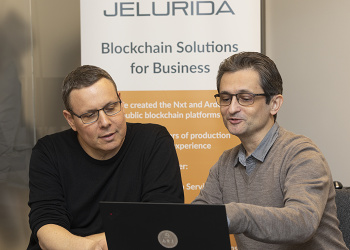
Ardor's development team primarily operates under the umbrella of Jelurida, the company that founded and continues to oversee the Ardor blockchain platform. Jelurida was established by experienced professionals in the blockchain and cryptocurrency space. Here is a brief overview of key individuals associated with Jelurida:
-
Lior Yaffe (Co-Founder and Managing Director): Lior Yaffe is one of the co-founders of Jelurida and serves as the Managing Director. He has a strong background in software development and has been actively involved in blockchain technology since the early days of Bitcoin.
-
Kristina Kalcheva (Co-Founder and Legal Expert): Kristina Kalcheva is another co-founder of Jelurida, bringing legal expertise to the team. Her role involves legal compliance and ensuring that Jelurida's projects adhere to relevant regulations.
-
Petko Petkov (Lead Software Architect): Petko Petkov plays a crucial role as the Lead Software Architect at Jelurida. With a focus on software development, he contributes to the technical aspects of Ardor and other blockchain projects.
The development team at Jelurida collaborates to enhance and maintain the Ardor blockchain, ensuring that it remains a secure, scalable, and feature-rich platform. It's worth noting that the blockchain community often involves contributions from a broader community of developers and contributors, and Jelurida encourages community involvement in the development and improvement of Ardor.
5. Investor & Partners
Updating
6. What is ARDR?
6.1. ARDR overview
ARDR serves as the native token of the Ardor blockchain platform, and it plays a crucial role in the ecosystem.
On January 1, 2018, Ardor successfully completed its mainnet launch. Since that pivotal moment, the ARDR token has transitioned to operate seamlessly on the Ardor blockchain.
6.2. Key metrics
-
Ticker: ARDR
-
Blockchain: Ardor Blockchain
-
Consensus: Proof of Stake (PoS)
-
Token type: Coin
-
Block Time: 64,3 giây
-
Transactions: 13 TPS
-
Total Supply: 998,999,495 ARDR
-
Circulating Supply: 998,999,495 ARDR
6.3. ARDR token use cases
Utility Token: ARDR is a utility token, meaning it is primarily designed for use within the Ardor blockchain platform. Users can employ ARDR to participate in various activities and transactions on the Ardor network.
Transaction Fees: ARDR is used to pay transaction fees on the Ardor platform. When users initiate transactions, they may need to spend a certain amount of ARDR to cover the associated fees. This mechanism helps prevent spam transactions and ensures the sustainability of the network.
Staking and Forging: Ardor utilizes a proof-of-stake (PoS) consensus mechanism, and ARDR holders have the opportunity to participate in the network's security and consensus process through staking. By staking their ARDR holdings, users may be selected to forge new blocks and validate transactions, earning additional ARDR as a reward.
Voting and Governance: ARDR holders may also use their tokens for voting on governance matters related to the Ardor platform. This democratic process allows stakeholders to have a say in the decision-making aspects of the network.
Creation of Child Chains: ARDR is involved in the creation of child chains on the Ardor platform. Users who wish to establish their own blockchain projects or applications as child chains typically use ARDR as part of the process.
7. How to Buy ARDR?
7.1. Ardor Storage Wallet (ARDR)
ARDR can be securely stored in the official Ardor Wallet provided by the Ardor platform. Ardor Wallet currently offers versions for both desktop and mobile platforms. Interested parties can access the ARDR storage wallet [here](insert link).
Users also have the option to store ARDR on reputable and listed exchanges.
7.2. Ardor Exchanges (ARDR)
Ranked 71st on Coingecko after nearly three years of establishment and development, ARDR is tradable on over 15 exchanges of varying sizes. With an average trading volume exceeding 1.3 million dollars in the last 30 days, ARDR demonstrates moderate liquidity at present.
ARDR experiences the highest trading activity on the Upbit exchange.
8. Roadmap
Q1-Q2 2022
-
Continuing Bridge Champ development and integration
Q3 - Q4 2022
-
Ardor 3.0 mainnet
-
Continue the development/maintenance of gateway contracts for wrapping Ardor assets with EVM based tokens
-
Continuing Bridge Champ development and integration
-
Continue the development/maintenance of IPFS integration contract
-
Feature development as needed to support the end user application ecosystem
9. Conclusion
With a focus on customization and versatility, Ardor empowers businesses and developers to create tailored solutions with ease. The introduction to ARDR has unveiled its potential to revolutionize decentralized applications and blockchain development, providing a foundation for innovative projects across diverse industries. As Ardor continues to evolve, it stands as a testament to the ongoing advancements in the blockchain space, promising a future where decentralized solutions are not only efficient but also highly adaptable to the unique requirements of various applications.